Vision & Mission

Engineered biology in the wild

Rationally engineered organisms that function as designed, can be tracked at any scale, and are safely integrated into natural ecosystems.

The world around us is alive

Plants pull carbon from thin air to make our food. Microbes ferment our food and beverages and detoxify our waste — turning milk into cheese, grapes into wine, grain into bread. Ocean cyanobacteria produce roughly half the oxygen we breathe. Soil microbiomes hold up entire ecosystems — and Earth's climate — through a thread of microscopic chemistry. The symbionts inside our own cells we now call mitochondria.

Life does most of the work that keeps the planet habitable, and we live, eat, breathe, and heal inside its operations.

Ten thousand years of trial and error

For roughly ten thousand years, humans have shaped this living world to our benefit. The first wild grass became wheat. The first wolf became a dog. One wild cabbage gave us kale, broccoli, cauliflower, and brussels sprouts. The first caves became breweries. Selective breeding, fermentation, agriculture, gardening, animal husbandry — all of it is the engineering of biology.

But for ten thousand years we did it the only way available to us: trial and error. Select what worked. Discard what didn't. Wait generations for results.

We are, for the first time in human history, no longer limited to that method.

We can now write DNA sequences and watch organisms do exactly what we asked. We can design molecules that didn't exist last year and brew them in a microbe by the gram. We can read translation kinetics across millions of mRNAs in parallel. We can release engineered organisms and resolve their distribution from a satellite in orbit. The trial-and-error era is ending. The design era is beginning.

The lever: precise mRNA design

The instrument, at the molecular scale, is messenger RNA. A cell does what its mRNA tells it to do — which proteins to make, how many of each, in which compartment, when. Design the mRNA precisely and you can reach into any living cell, or into any microbe in any microbiome, and reset its behavior with single-base resolution.

Designed mRNA is the closest thing biology has to a programming language. We are learning to write in it — across the whole continuum, from one cell in a tissue to an entire microbiome in a watershed.

What precise genetic engineering of living cells and microbiomes makes possible

Cells that express only where we want, only when we want

Engineered mRNAs whose 5′UTRs switch on in one tissue, one cell type, or one developmental state and stay silent everywhere else — carrying near-infrared reporters that confirm in vivo where the design actually landed. The same instrument designs T-cell therapies, tumor-selective payloads, root-specific plant proteins, and laboratory tools no one has built yet.

A planetary nervous system for climate

Engineered soil microbiomes that pull carbon out of the air and report how much they have captured — readable by a drone overhead or a satellite passing over — so a farmer or an entire continent can verify the work.

Engineered microbiomes with off-switches

Communities of beneficial microbes — in the gut, in soil, on plants, in built environments, in industrial fermenters — that work as designed, persist as long as we want, and disappear cleanly when we withdraw a small molecule from the diet, water supply, or feedstock.

Crops that diagnose themselves

Plants whose own leaves carry hyperspectral reporters for drought, pathogen, or nitrogen deficiency — readable from orbit weeks before the harvest is lost.

Antibiotics that target a single pathogen

Operon-specific countermeasures that kill what we want and leave the rest of the microbiome standing.

Accountable release into the wild

Engineered organisms barcoded so we can find them again, governed by standards we wrote in advance, tracked across years by a global hyperspectral satellite layer. So that the next deliberate release isn't a regulatory crisis — it's a normal Tuesday.

A global atlas of synthetic DNA in the environment

Because the engineered DNA we released over the last 50 years didn't disappear, and the next 50 years' will not either. Knowing what's out there is the foundation of everything else.
How we get there: three themes, one vision

We pursue this vision through three indispensable themes — and the vision at the center happens only when all three are running.

Theme 1 · Predictable

Genetic Design: mRNA Engineering

Make engineered biology PREDICTABLE

Sequence-to-function rules for mRNA structure, translation, and stability. MIT-seq and CFTseq produce direct kinetic parameters across millions of mRNAs in parallel — so we can design protein levels instead of guessing them.

You cannot deploy a circuit you cannot dose.

Explore Theme 1 →
Theme 2 · Observable

Hyperspectral Biology

Make engineered biology OBSERVABLE

Gene-encoded reporters with distinctive UV / Vis / NIR / mid-IR signatures, readable from microscope to satellite. Once read-out exists at every scale, every other deployment decision becomes evidence-based.

The reporters we have today were built for microscopes; the reporters we need are readable from a satellite.

Explore Theme 2 →
Theme 3 · Deployable

Engineering × Ecology

Make engineered biology DEPLOYABLE

Estonia 1989 showed us that a single deliberate release can persist by horizontal gene transfer for 35 years. The forensic, design, and governance stacks turn that reality into a research program — not a regulatory crisis.

We can no longer assume the next release won't last decades. Plan accordingly.

Explore Theme 3 →
The center — engineered biology in the wild — is the convergence: organisms whose protein levels we designed, whose presence we can read at any scale, whose deployment is governed by infrastructure that didn't exist before this lab.
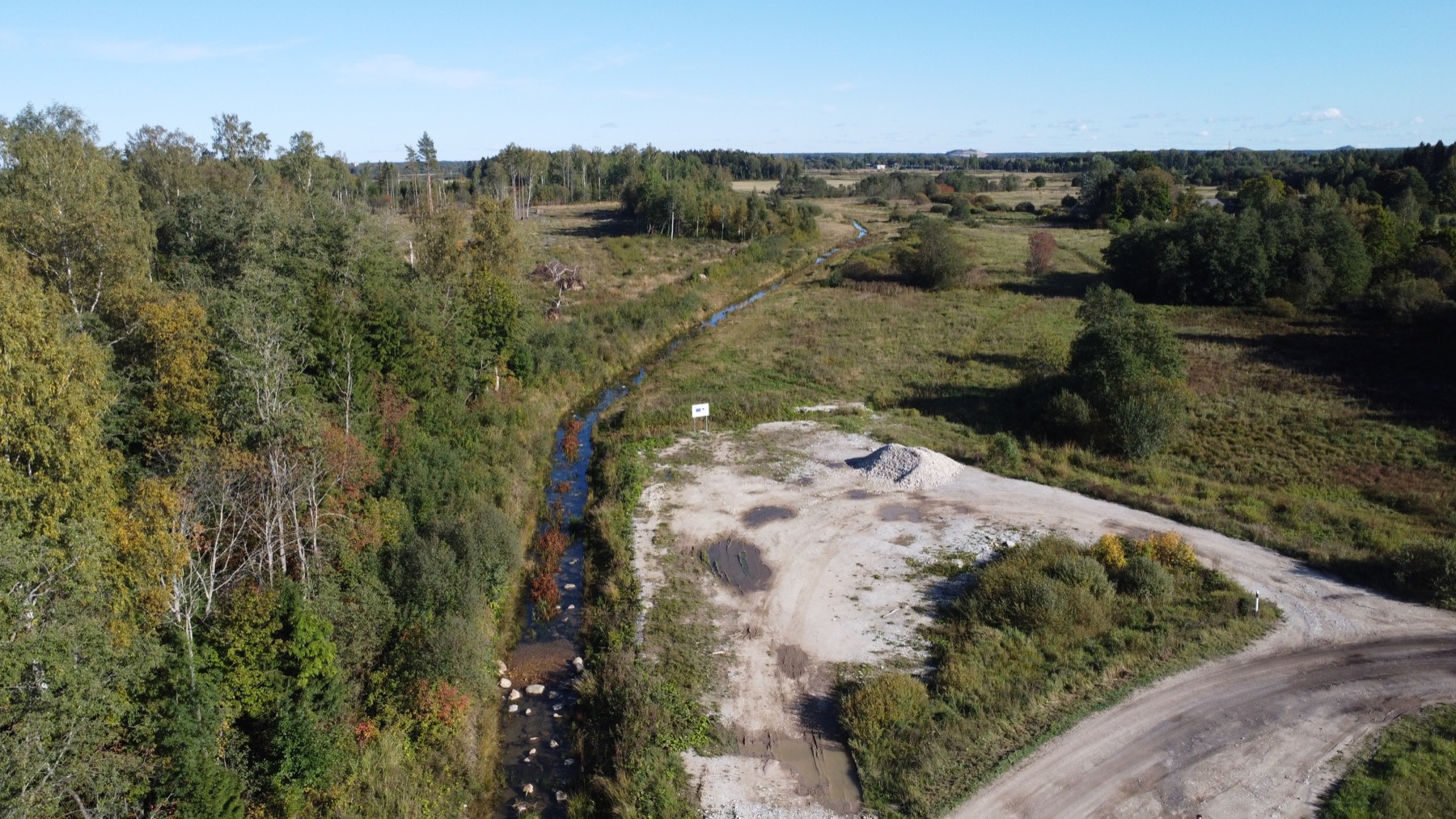
Aerial view of the Estonian peatlands, where the lab tracks a decades-old environmental release.
Engineered biology in the wild: the Estonian peatlands, where we track a deliberate release made in 1989. See the field gallery →

The grand questions on our wall

Four questions index every project in the lab.

1
What are the kinetic rules of translation initiation, across cell types, organisms, and disease states — and can we use them to design protein levels instead of guessing them?
2
Can we make engineered biology readable at every scale — from the microscope to the satellite — by encoding it in spectrally distinctive small molecules?
3
What does it take to release engineered organisms into ecosystems safely, trackably, and accountably — given that we already know they persist by HGT for decades?
4
What would it take to make engineered biology a credible, useful, accountable part of the world outside the lab?

Mission

The Chemla Lab is built to deliver the design era of biology in three legs: the kinetic platform that lets us write protein expression on purpose, the spectral platform that lets us read it from anywhere, and the ecological + governance platform that lets us deploy it responsibly. We train integrative biologists who can do all three, and we build the institutional infrastructure (standards, registries, policy) that the field will need when the work leaves the lab.

The lab pursues this in the open: open-source tools, open data where we can, open methods always — because the work is too important to be locked behind any one group's IP.

Want to see how the vision lives in actual projects?

Explore our research themes Join the lab